JOURNAL
Stripes of Memory and Color in Chefchaouen
•
Lisa Kristine
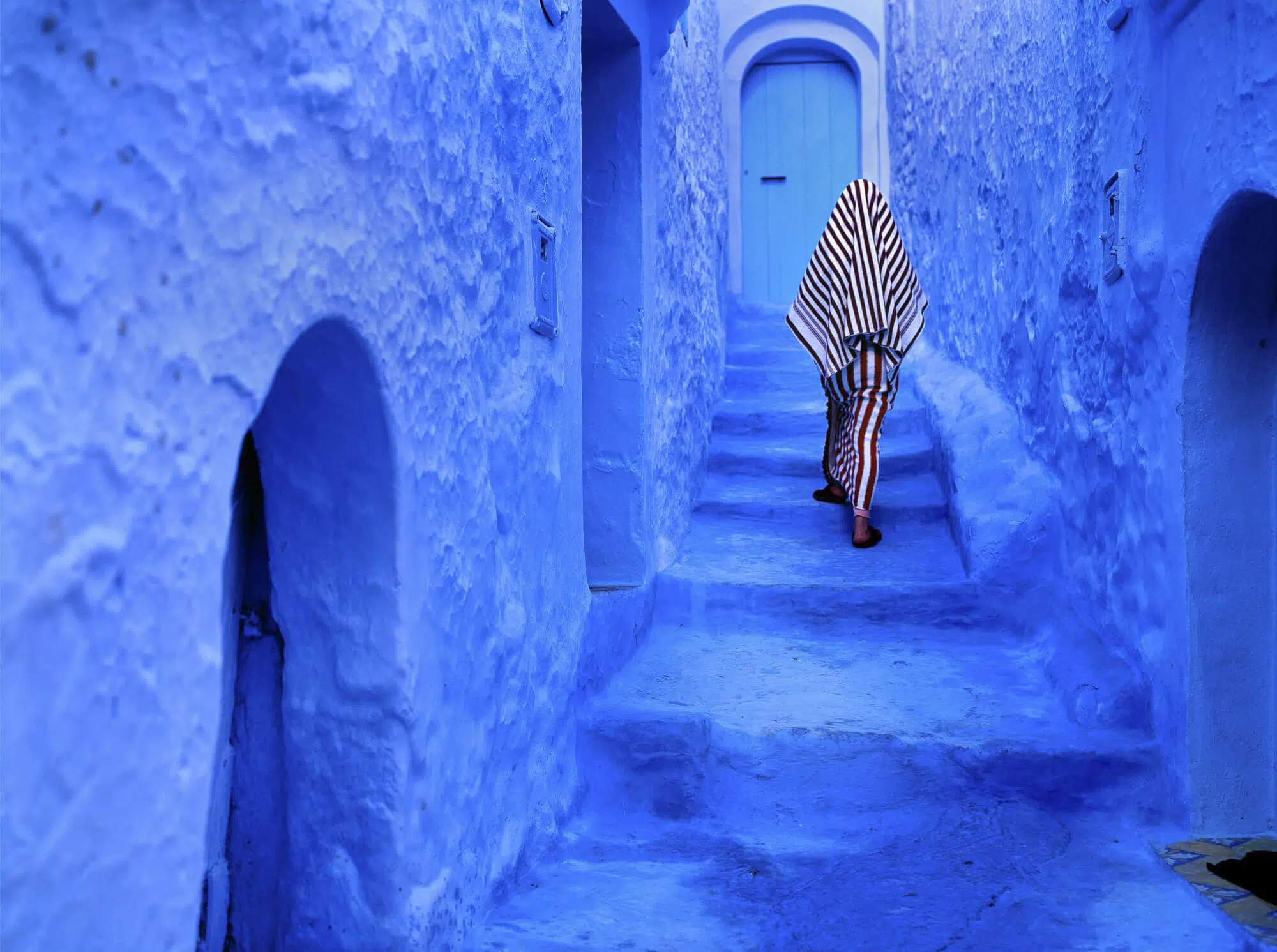
Beneath the dusty blue tones of Morocco’s “Blue City,” a quiet tension hums—a layered tapestry of history, resilience, and reverence. My eye was first captured by color, but my heart stayed for the stories whispered through centuries-old stones. In Chefchaouen, the threads of past and present are inseparable—painted in hues of hope, memory, and endurance.
Where Color Meets Complexity: The Dual Allure of Chefchaouen
There’s something undeniably enchanting about Chefchaouen. I spent months—perhaps even years—trying to decide what drew me in more: the kaleidoscopic serenity of its blue-washed alleys or the turbulent histories that echo through its mountainous ridges. Eventually, I surrendered to the truth that both the aesthetic beauty and the profound human history of this place were inseparable. Together, they tugged at the strings of my imagination and empathy.
Founded in 1471 by Moulay Ali Ben Rashid, Chefchaouen was once a stronghold for Riffian Berber tribes resisting Portuguese conquest. Just a few decades later, it became a sanctuary for Muslims and Jews fleeing persecution in Granada. Their arrival sparked a cultural and economic flourishing—and an enduring spiritual refuge amid unrest.
A Glimpse Through the Archway: Following the Stripes
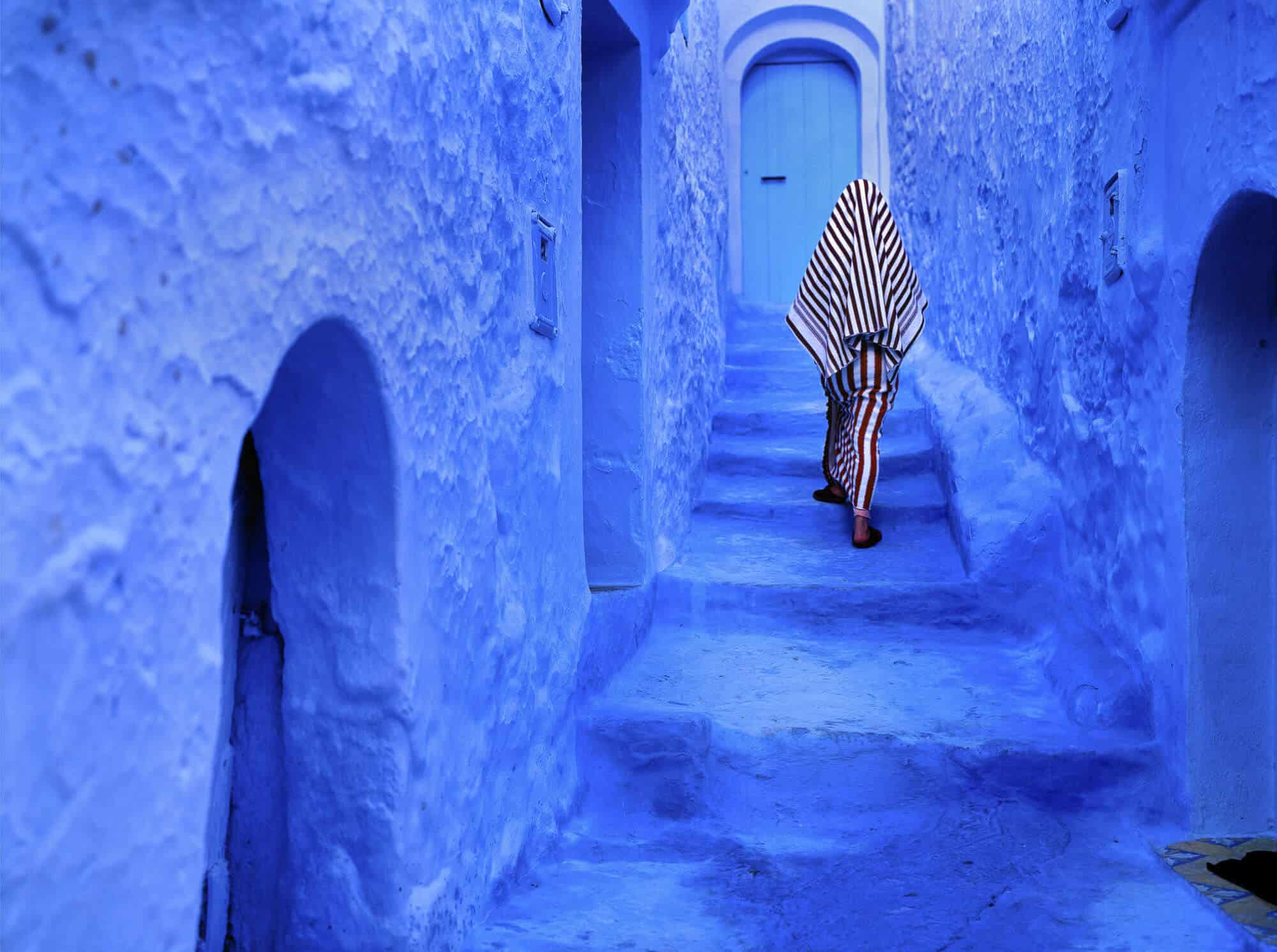
I remember walking through one of the city’s labyrinthine streets when she appeared—a woman cloaked in vivid red and white stripes, traditional Berber fabric wrapping her like a moving emblem of heritage. As she wove her way up a flight of stone stairs, my camera followed—not as a voyeur, but as a witness drawn to something deeper.
She wasn’t just walking home. She was ascending through centuries of transformation, past archways once meant to defend, now softened by layers of blue and time. In that instant, I imagined her home not simply as a dwelling, but as a cradle of continuity—where dignity, beauty, and memory live on.
Blue Walls and a Mosaic of Faiths
The city’s iconic blue isn’t just beautiful—it’s symbolic. Long before it became a traveler’s dream, the blue hue was painted by Jewish refugees as a sacred reminder of divine presence, replacing the earlier whitewashed walls marked by green doors and windows, symbols of the Muslim communities. Centuries of faith, migration, resistance, and rebirth now quietly live in every corner.
And when Spain invaded in the 1920s, the city opened to outsiders—marking a new chapter, yet again, of complexity and cross-cultural evolution.
Why This Image Matters: A Meditation on Place and Belonging
Photographing this moment was more than capturing light and color—it was an invocation of the countless lives layered within Chefchaouen’s walls. It’s a portrait of how culture expresses itself through texture, through color, and through movement. And perhaps, most importantly, it’s a reminder that within fractured histories, unity still flickers.
In this woman’s stride, in her garments, in the path she follows home—there is a deep hum of resilience. A reminder that while cities change, the soul of a place lives on through its people.
Beyond the Image: A Call for Empathy Through Art
Places like Chefchaouen are not simply destinations; they are living mosaics of cultural diversity and enduring spirit. Through humanitarian photography, we have the power to witness and honor these stories, bringing forth the shared dignity we all hold.
As viewers, our role is to look deeper—to see not just the visual beauty, but the human stories embedded within. And in doing so, to reconnect with our shared humanity.
How You Can Support:
Explore the Artwork: See the limited edition print of Stripes | Morocco, now available in three sizes.
Support Humanitarian Photography: Every piece supports Lisa Kristine’s mission of social impact storytelling and global awareness.
Share the Story: Spread this image and its meaning to inspire conversations around cultural heritage and human dignity.