JOURNAL
Migration of Salt in Vietnam
•
Lisa Kristine
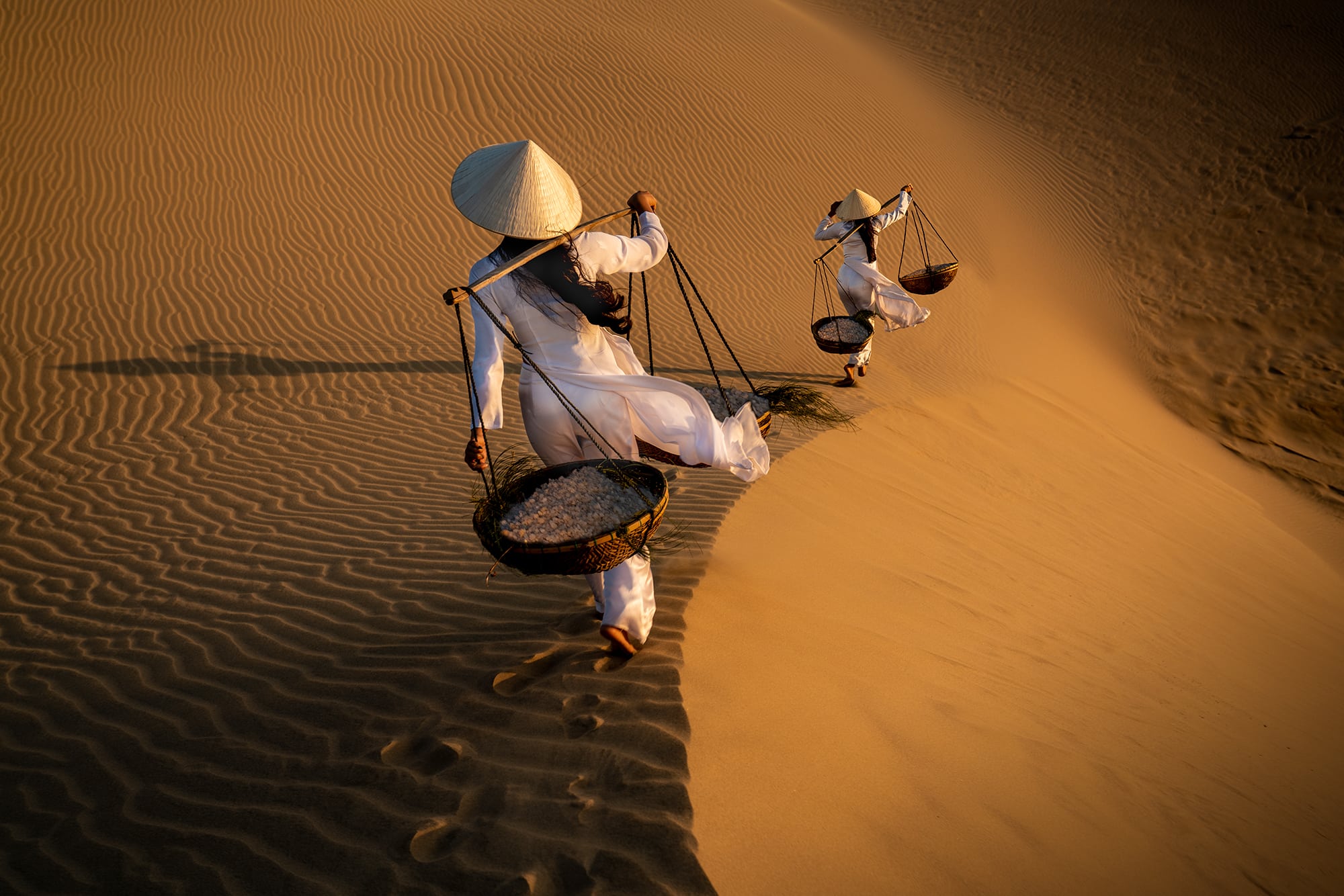
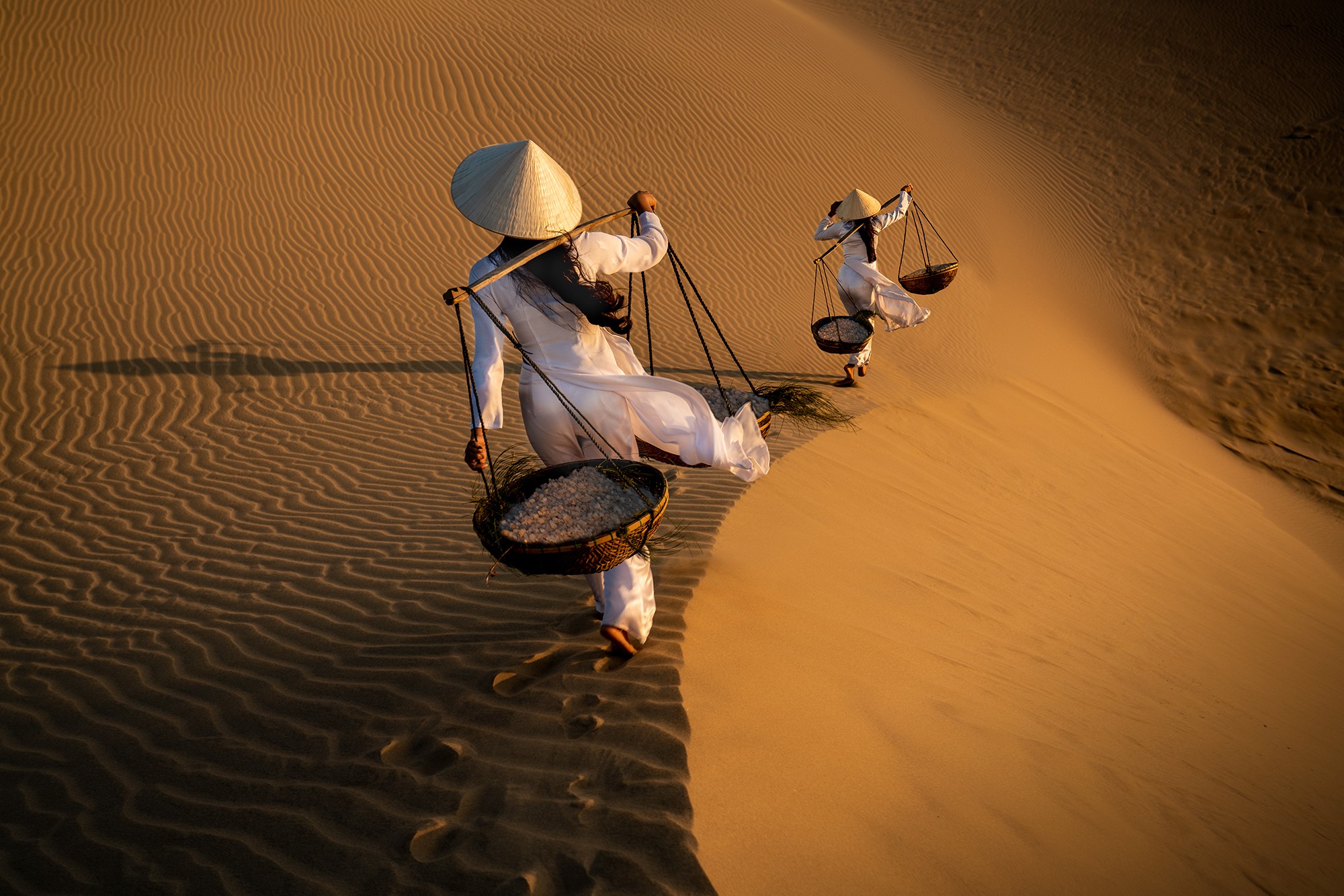
In the quiet hours before dawn, when most of the world is still wrapped in darkness, the day has already begun for the women who harvest sea salt along Vietnam’s coast. Their movement across the land feels both ancient and immediate, a luminous reminder that some of the most essential work on earth happens long before the sun rises.
The Quiet Strength Behind the Salt
In coastal provinces of Vietnam, salt workers, many of them women, begin their labor well before 4 a.m. To avoid the punishing heat of the day, they step into the early morning air and carry out work that is physically demanding, repetitive, and vital. These women harvest sea salt and transport it to markets or collection points, moving with purpose across the shoreline as part of a rhythm shaped by tide, terrain, and time.
What drew me to this scene was not only the labor itself, but the profound grace within it. Across the salt fields, these women seemed to migrate over a golden carpet, their presence both grounded and ethereal. The work was real, practical, and exhausting. Yet there was also something deeply poetic in the way they moved together through the landscape.
A Landscape Shaped by Wind
In this coastal region, the wind sculpts the dunes with an artist’s hand. It carves rippling curves and sinuous waves into the earth, transforming the landscape into something almost dreamlike. Against this textured terrain, the women appear as part of a larger, living composition, each figure carrying not only salt, but also the story of movement itself.
Their garments and loose hair speak to that motion. There is spontaneity in their silhouettes, softness in the way fabric bends to air, and a fluidity that mirrors the journey of salt from sea to land, from markets to kitchens, and ultimately to tables around the world. In that moment, the image became more than a document of labor. It became a reflection on flow, resilience, and our shared humanity.
What the Wind Revealed to Me
Over the years, I have come to understand the magic and mightiness of wind in deeply transformative ways. Wind is invisible, yet it makes itself known through what it carries, shapes, and changes. It moves enormous sailing vessels across vast waters. It lifts tiny grains of pollen and sends them drifting toward new life. It can smooth a lake into a mirrored stillness or rise with such force that it transforms beauty into danger.
Standing in places like these, I am reminded that nature is never passive. It is always participating. The wind in Vietnam was not merely background. It was collaborator, witness, and storyteller.
The Human Perspective Within the Landscape
What remains with me most is the dignity of the women themselves. Their labor was not romanticized by the early light, nor softened by the beauty of the dunes. Rather, the beauty of the setting deepened my awareness of the strength required to endure such work day after day.
This is the heart of humanitarian photography and social impact storytelling. It is not simply about showing hardship. It is about honoring people as whole human beings, with presence, perseverance, and power. These women carried more than salt. They carried the quiet force of devotion, survival, and contribution. Their work connects homes and communities in ways that are often unseen, yet deeply felt.
To witness them was to witness human dignity and hope in motion.
A Larger Reflection on Labor, Nature, and Connection
The migration of salt is also a story about interdependence. What begins in sea water passes through human hands before it reaches our daily lives. This journey reminds us how intimately connected we are to landscapes, laborers, and traditions beyond our own immediate view.
In a world that often celebrates speed and convenience, images like this invite us to pause. They ask us to look again at what sustains us. They ask us to remember the people behind the essentials we so easily overlook. And they offer a heartfelt opportunity to deepen our cross-cultural understanding, not through statistics or distance, but through presence and empathy.
This is the transformative power of Lisa Kristine Photography and Lisa Kristine Art at their best: to create space for reflection, reverence, and connection. Through ethical photography and compassion-driven storytelling, we are invited to see not only another life, but also ourselves within it.
A Call to Hope and Awareness
The women in Vietnam’s salt fields remind us that labor can hold beauty, and beauty can hold truth. Their early morning journey across wind-shaped dunes is both practical and symbolic. It speaks to endurance. It speaks to movement. It speaks to the invisible threads that bind our lives together across geography, culture, and circumstance.
When we look with care, we begin to understand that every act of witnessing can become an act of honoring. And every act of honoring can open the door to deeper empathy.
This is where hope begins: in seeing one another clearly, and in recognizing the sacred dignity carried in everyday work.
How You Can Support
Stay Informed: Learn more about the lives and labor of coastal communities and the people whose work sustains daily life around the world.
Practice Mindful Consumption: Reflect on the human journey behind the goods you use every day, including the essential materials that arrive quietly at your table.
Share the Story: Help amplify stories rooted in dignity, resilience, and celebrating shared humanity through art and conversation.
Support Humanitarian Art: Follow and share the work of photographers and artists committed to social justice advocacy, ethical storytelling, and global connection.