JOURNAL
Heirloom of the Mountain Mothers in Ladakh
•
Lisa Kristine
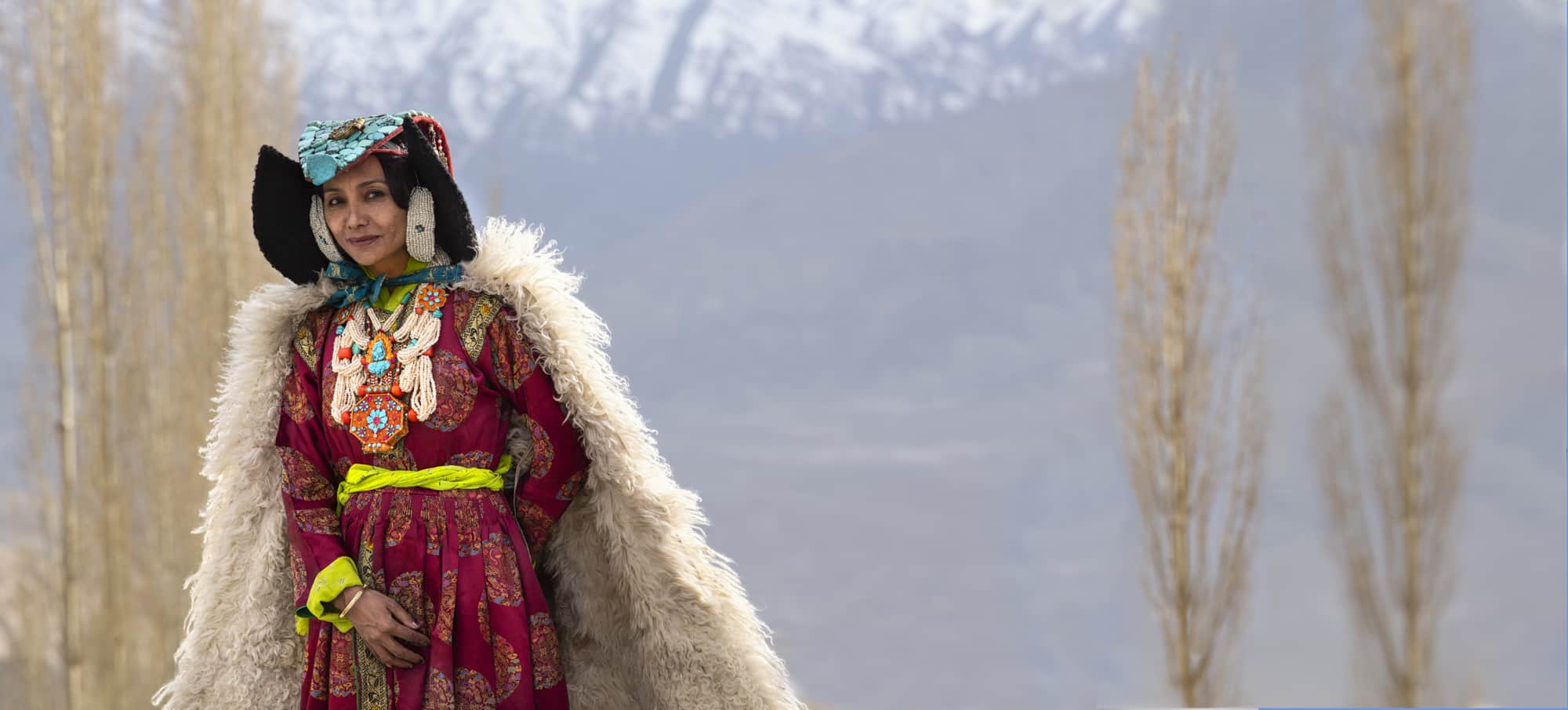
In the high Himalayan desert of Ladakh, where the air is thin and the mountains rise in solemn silence, I met a woman who seemed to carry an entire lineage upon her brow. She stood with an air of quiet royalty, wrapped in stillness, strength, and ancestral grace. In that moment, the landscape itself appeared to bow around her.
The Ladakhi Perak and the Strength of Cultural Identity
She wore a perak, the traditional Ladakhi headdress adorned with cascading turquoise stones, lambswool earflaps, and intricate details shaped by time and tradition. It was breathtaking, yes, but it was never merely decorative. The Ladakhi perak is a profound statement of identity, lineage, and belonging.
Against the cold vastness of the mountains, her presence felt even more luminous. The snow-capped peaks behind her seemed like silent witnesses, hovering like ancient guardians in honor of her greater stature. What she wore was not simply an object of beauty. It was a living heirloom, a visible expression of human dignity and hope, and a tribute to the enduring strength of Ladakhi women.
A Living Heirloom Passed from Mother to Daughter
I did not come to know this woman deeply in the short time we shared, but I soon learned the remarkable history carried within the headdress she wore with such heartfelt pride. Each turquoise stone had been added by hand across generations, passed from mother to daughter, forming a lineage you could see and feel.
This is what moved me most. The perak holds memory. It holds family. It holds the quiet, transformative power of women who preserve culture not only through ceremony, but through daily devotion, resilience, and love.
In many places across the world, heirlooms are tucked away for safekeeping. Here, the heirloom is worn. It rests on the body as a declaration that ancestry lives on, that women remain the keepers of continuity, and that tradition can still breathe in the modern world.
The Mountain Mothers of Ladakh
The women of Ladakh have long been protectors, pillars of strength, and peacemakers within their communities. Their power does not rely on outward displays of force. It is steadier than that. It is woven into family, ritual, endurance, and care.
There is a kind of strength that speaks softly and yet shapes generations.
That is what I felt in her presence. Her posture, her gaze, and the way she wore the perak all revealed a profound inner authority. She embodied something larger than herself, something rooted in our shared humanity and in the sacred work of carrying culture forward.
Ladakh in a Changing World
Today, Ladakhi communities, like so many indigenous communities and traditional cultures across the globe, face increasing pressure from Western ideas of change, modernization, and so-called progress. As these influences deepen, garments and adornments once integrated into everyday life are often reserved for ceremonies and festivals.
And yet, this does not mean the spirit behind them has faded.
The perak may now appear most often on special occasions, but its meaning remains deeply alive. It continues to symbolize cultural diversity, continuity, and reverence for the women who have sustained Ladakh’s traditions across time. In this way, the headdress becomes more than heritage. It becomes a quiet act of preservation.
This is why Humanitarian Photography and Social Impact Storytelling matter so deeply to me. Photography can help us pause long enough to see what must not be lost. It can honor the wisdom held in ancestral traditions and remind us that progress without memory can come at a heartbreaking cost.
Why These Stories Matter to Our Shared Humanity
When we look at a portrait like this, we are invited into more than a visual encounter. We are invited into relationship. We are asked to recognize the sacred dignity of another life, another history, another way of seeing the world.
In a time when homogenization moves quickly and cultural erosion often happens quietly, preserving these stories becomes an act of empathy. Through Lisa Kristine Photography and my broader commitment to Compassion-Driven Storytelling, I hope to create space for these moments of recognition. Not as distant admiration, but as an intimate reminder that every culture holds wisdom, beauty, and meaning.
The Ladakhi woman in this portrait stands not only for herself, but for generations of mountain mothers whose strength is woven into stone, cloth, and memory. She reminds us that resilience can be graceful, that tradition can be luminous, and that identity can endure even in the harshest landscapes.
A Call to Honor What Endures
The world does not need fewer traditions rooted in reverence, dignity, and belonging. It needs more of them. It needs us to look closely, to listen deeply, and to value the cultural expressions that carry the soul of a people.
This portrait is, for me, a meditation on legacy. On motherhood. On the quiet majesty of women whose influence is seldom loud, yet utterly transformative. In the mountains of Ladakh, I witnessed a woman crowned not only in turquoise, but in history.
May we learn to recognize this kind of strength wherever it lives.
How You Can Support
Learn More: Explore the traditions of Ladakh and the cultural significance of garments like the perak to better understand the communities that preserve them.
Support Cultural Preservation: Contribute to organizations and local initiatives that help protect indigenous communities, traditional crafts, and ancestral knowledge.
Share the Story: Help amplify stories that celebrate human dignity and hope, cultural resilience, and the transformative power of women.
Practice Empathy in Art: Seek out and support ethical photography and social impact storytelling that honors people and cultures with respect.
Reflect on Your Own Heirlooms: Consider the objects, rituals, or stories passed down in your own family and how they connect you to your lineage and identity.