JOURNAL
Stillness and Spiritual Presence in Nepal’s Sacred Temples
•
Lisa Kristine
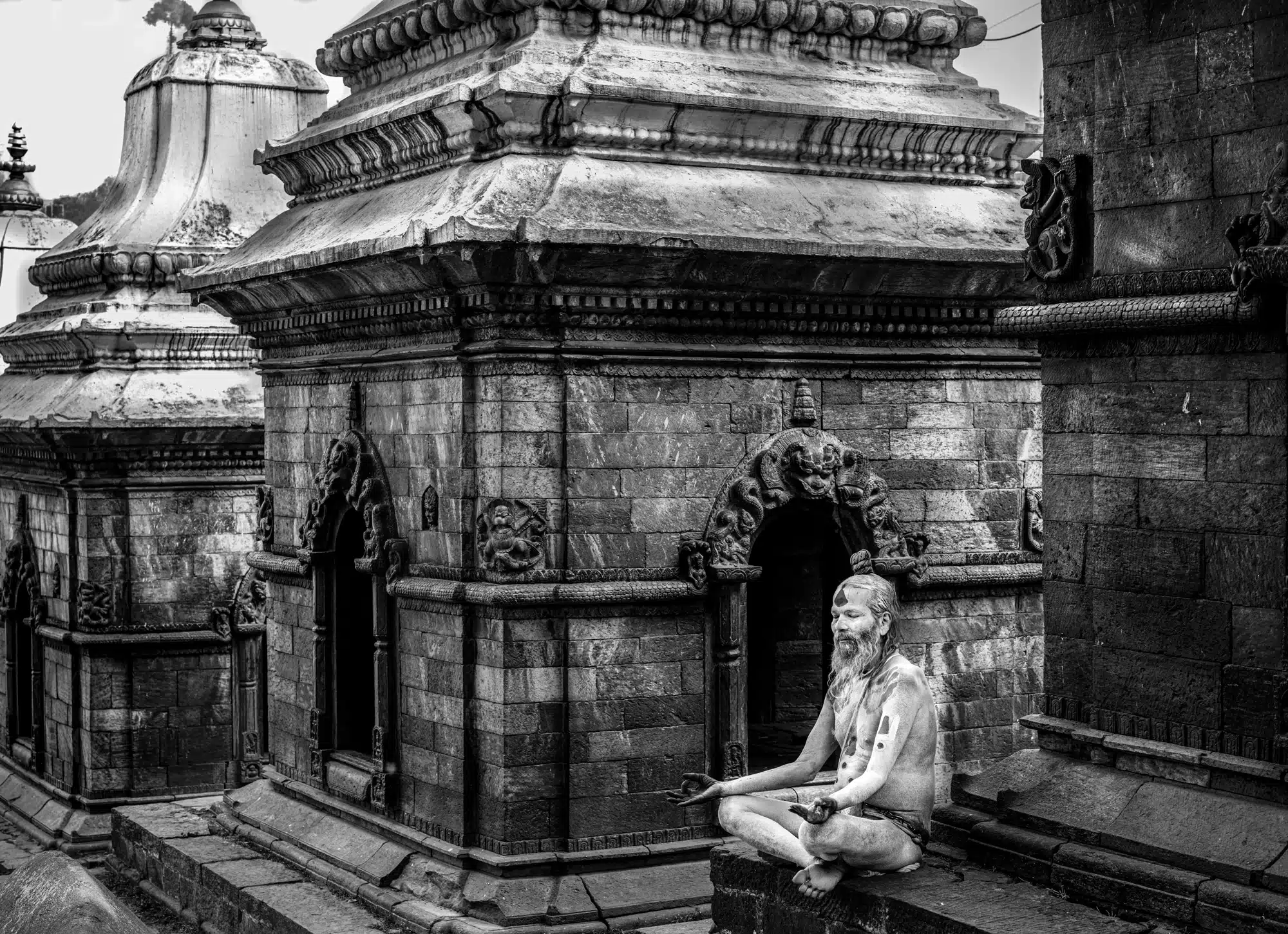
Stillness Among the Sacred: A Meditation on Transcendence in Nepal
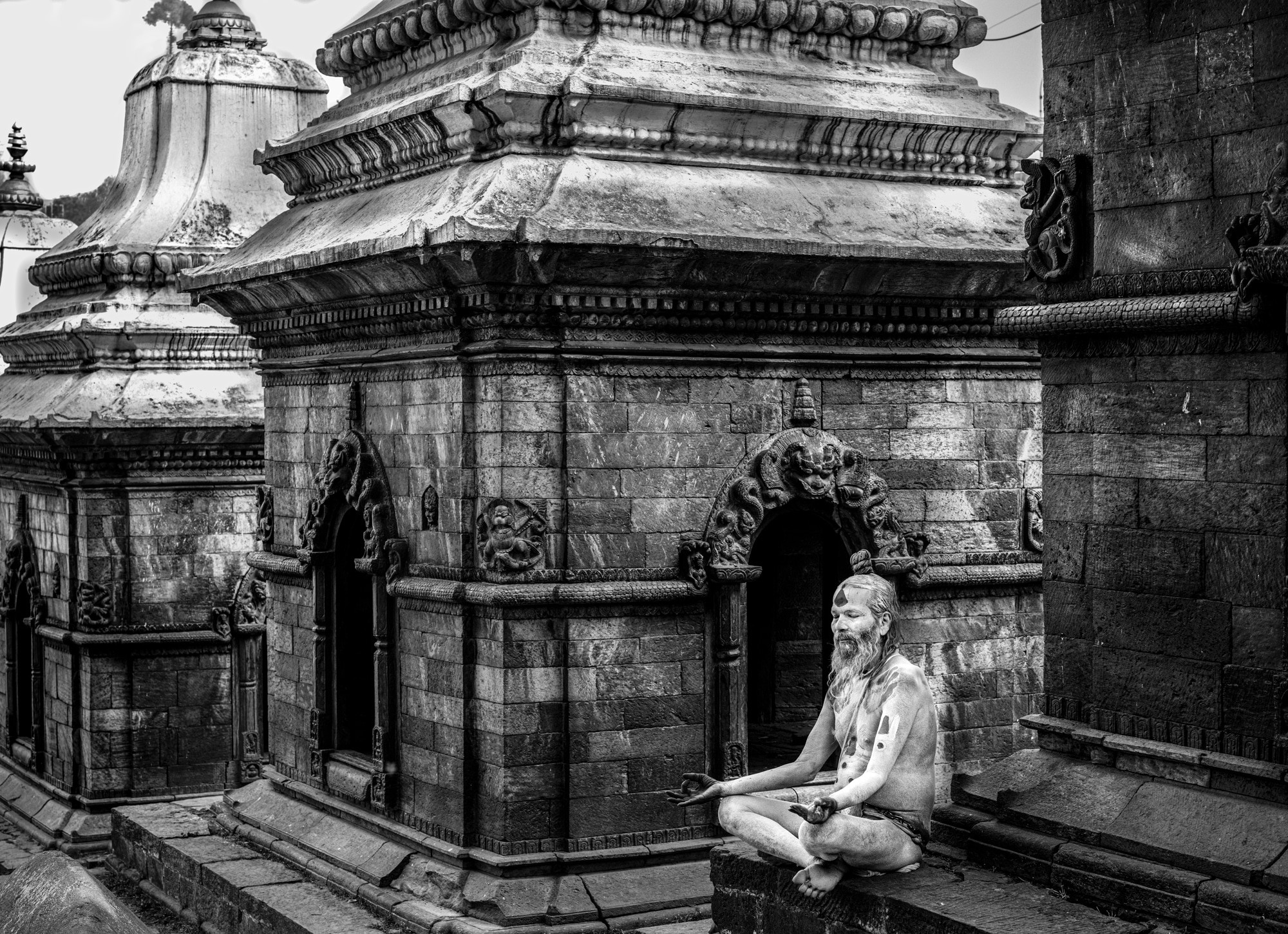
In the heart of Nepal, within the ancient and sacred Pashupatinath Temple complex, I encountered a moment of profound stillness. A Sadhu man, his body dusted in ceremonial white ash, sat high above the crowd, immersed in deep meditation. With eyes closed and spine erect, he seemed to float between worlds, fully surrendered to the divine.
His presence struck me like a quiet revelation.
Honoring Spirit in a Transient Body
The Sadhu’s ash-covered skin symbolized a truth he has long embraced: the body is impermanent. His daily meditation is an act of reverence to Lord Shiva, the god of transformation, destruction, and rebirth. In choosing this path, he has stepped away from material attachments and into a life of spiritual devotion.
This scene is not uncommon in Nepal. Travelers often find themselves drawn to the Pashupatinath Temple to witness the grandeur of its ancient architecture or to observe sacred rituals that feel worlds apart from their own. Some come to look, while others come to see to open themselves to something deeper, to let the experience reshape them from within.
A Personal Reflection on What Endures
Watching the Sadhu, I felt a quiet invitation to reflect on my own life. His stillness mirrored something I have come to value more and more with time: the peace that comes from letting go.
There was a time when I, like many, sought meaning through accomplishments and possessions. But with age and experience, especially through my journey as a humanitarian photographer, what I treasure has changed. I now find value in simplicity, in being of service, in showing love. Not just outwardly, but inwardly. Not just occasionally, but daily.
It is in the quiet moments, the unspoken prayers, and the shared gazes across languages and borders that I find the deepest truth: we take nothing with us when we go.
Transcendence Beyond Culture
The Sadhu’s practice may be rooted in Hinduism, yet his devotion speaks to something beyond religion or creed. It speaks to the universal human desire to transcend the noise of the world, to connect with something greater than ourselves, to cultivate meaning in a life that often feels fleeting.
These values spiritual presence, personal liberation, and compassionate awareness—are not confined to temples or mountain shrines. They live in people across the globe. They rise in quiet acts of kindness, in the resilience of survivors, and in the courage of those who choose love over fear.
As I continue to document stories across cultures, stories of beauty, hardship, and hope, I am reminded that true sacredness does not depend on where we are, but on how we choose to see.
The Inward-Outward Journey
The path to presence is not linear. It winds between the inward and the outward, the seen and the unseen. First inward, then outward. Inward again. Outward again. Until, one day, we step beyond the boundaries of body and time into the great unknown.
The Sadhu reminded me of this rhythm. And perhaps, in his stillness, he reminds us all.
How You Can Support
Learn More: Explore Lisa Kristine Photography: Discover more stories that honor global spiritual traditions and human dignity. View Gallery
Practice Mindful Reflection: Wherever you are, take a moment each day to sit in silence and breathe.
Support Cultural Preservation: Learn about and support organizations that protect sacred spaces and spiritual practices around the world.
Share This Story: Help others discover the power of spiritual stillness and cross-cultural understanding.