JOURNAL
Wisdom’s Wardrobe in the Navajo Nation
•
Lisa Kristine
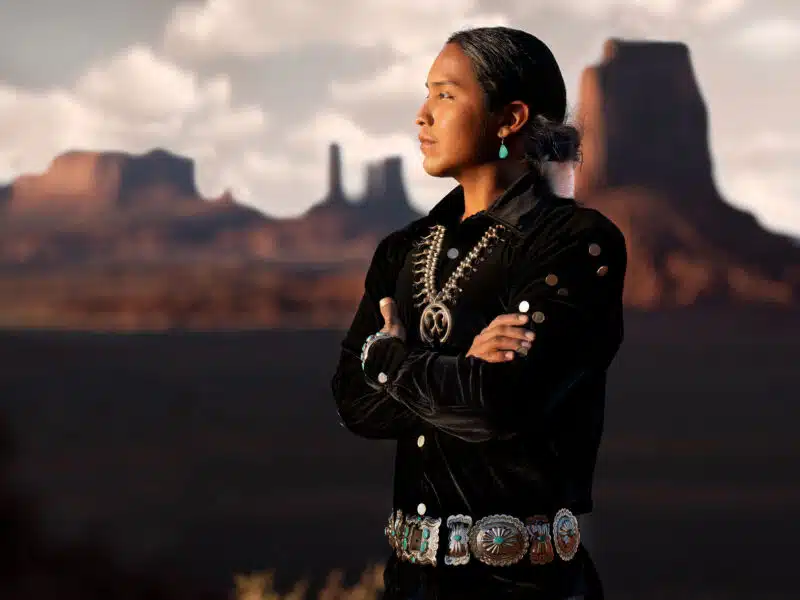
There are moments when a single gaze can hold centuries. In the vast, wind-swept beauty of the Navajo Nation, I met a young man whose quiet strength and luminous presence etched itself into my memory. He stood not for himself alone, but for his ancestors, his people, the Diné, and the sacred earth beneath his feet.
The Power of Cultural Identity and Ancestral Adornment
In this young Diné man, I witnessed ego-less pride—a deep, rooted dignity that radiated from his posture, his expression, and the intentional way he adorned himself. Each piece of clothing and jewelry was more than fabric or metal. It was wisdom’s wardrobe, a visual language of belonging, remembrance, and reverence.
The tsiiyéél, a traditional sheep-string wound through his hair, speaks to ancient customs and an intimate connection to land and livestock. The squash blossom necklace, with its crescent-shaped pendant, centered his spirit like a compass grounded in ancestry. He had saved for years to buy it, not as a symbol of status, but as a spiritual bridge to honor the lineage behind him and the journey still unfolding.
A Portrait That Holds More Than a Moment
I return often to this image. The turquoise stones in his ears, shaped like drops of rain or tears, seem to shimmer with the sacredness of both joy and loss. The vintage coins on his sleeves, stitched into the threads of his clothing, tell stories of trade, artistry, and survival. In Diné tradition, such embellishments carry more than aesthetic value. They represent resilience, wealth, and social identity.
But his true treasure wasn’t silver or stone. It was the unbreakable thread between his present and his past, his embodiment of human dignity and hope, quietly and powerfully expressed through his presence.
Beyond Fashion: Clothing as Cultural Legacy
Around the world, traditional clothing serves as a tapestry of cultural diversity, with each stitch and bead linking us to generations before. For Indigenous communities like the Diné, adornment is a sacred act. It protects. It celebrates. It reminds.
When we wear symbols that echo our heritage, we invite ancestral memory into our daily lives. We honor the land, the people, and the sacred stories sewn into who we are. Whether through turquoise, velvet, or woven string, we dress ourselves not in trends, but in testimonies.
The Global Language of Adornment and Belonging
This image and this young man remind me of the shared impulse across global cultures to carry our stories on our skin. From the intricate beadwork of the Maasai to the bold patterns of the Sámi gákti, traditional dress speaks a universal language of identity and resilience. As a humanitarian photographer, I’ve seen how adornment becomes visual anthropology, documenting the soul of a people in ways that words cannot.
It is in these moments, captured in light and preserved through Lisa Kristine Photography, that we glimpse the power of empathy in art and the deep need we all share: to be seen, to be remembered, and to belong.
A Call to Remember and Reconnect
Today, I invite you to consider what you wear as more than expression. Choose pieces that ground you, that echo your roots, that remind you of the deeper connections we share. Adorn yourself in wisdom’s wardrobe, not for show, but for soul.
Let each item you wear be a tribute to those who came before, to the land that holds us, and to the dignity that lives within us all.
How You Can Support
Learn More: Explore the rich history and cultural traditions of the Diné at navajo-nsn.gov.
Support Ethical Storytelling: Follow and share Lisa Kristine’s work that honors Indigenous communities through transformative portraiture and social impact storytelling.
Celebrate Cultural Identity: Wear or display meaningful cultural pieces that reflect your heritage or support artisans preserving traditional crafts.