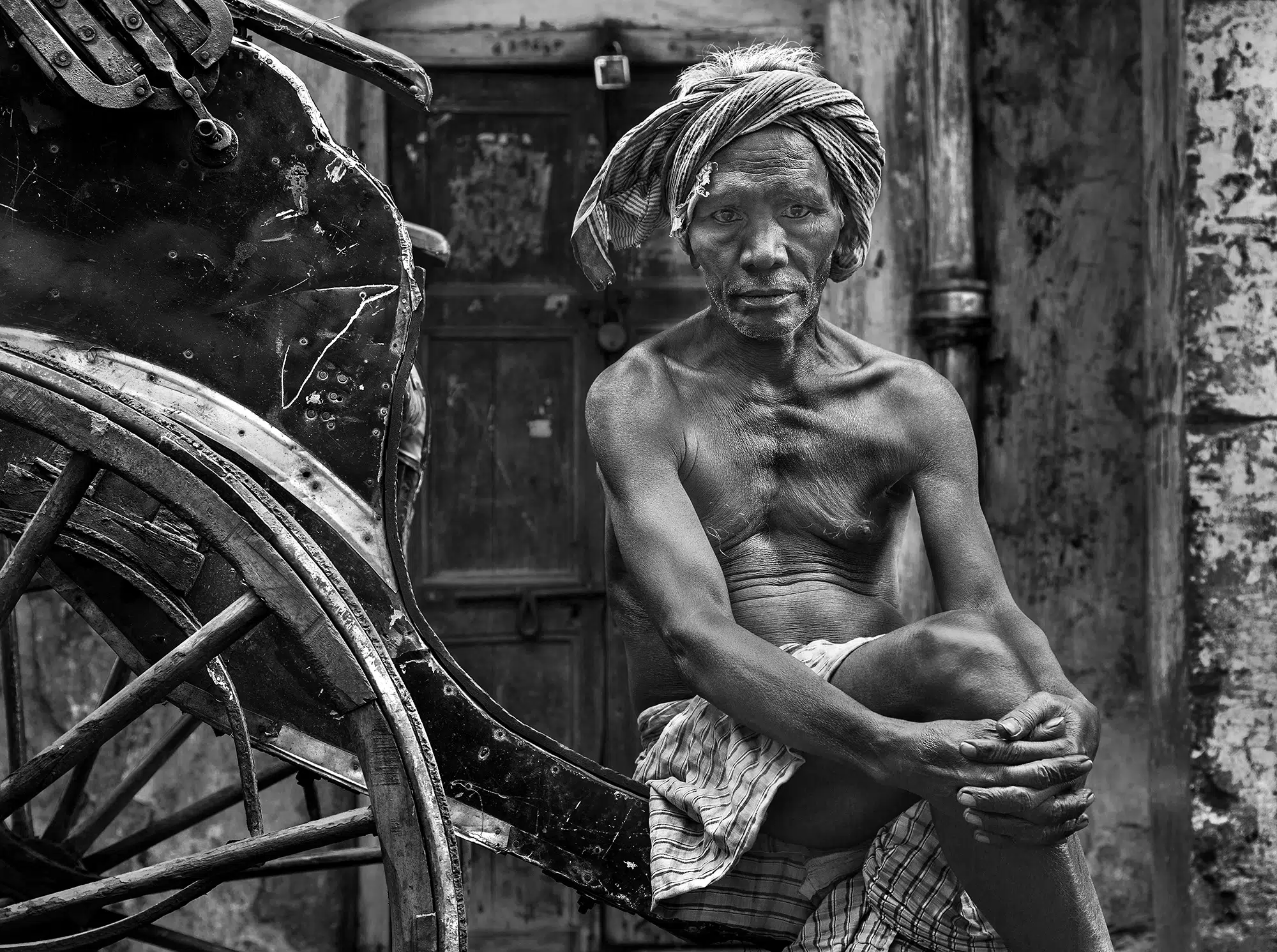
Rickshaw wallahs are a distinct part of the fabric of Kolkata. For more than 130 years hand pulled rickshaws have been pulled by men, known as rickshaw wallahs, wrapped in worn ‘lungis’ wrapped around their waists. Beginning at as early as 4am, rickshaw wallah’s enduringly navigate the many narrow and bustling lanes of Kolkata, ferrying packages to bazaars, vegetables and chickens to the markets, and children to school. Kolkata is one of this last places in the world that hand-pulled rickshaw wallahs still exist as their vocation is fast disappearing yet has been inextricably related to Kolkata’s cultural fabric.
Rickshaw wallahs are a distinct part of the fabric of Kolkata. For more than 130 years hand pulled rickshaws have been pulled by men, known as rickshaw wallahs, wrapped in worn ‘lungis’ wrapped around their waists. Beginning at as early as 4am, rickshaw wallah’s enduringly navigate the many narrow and bustling lanes of Kolkata, ferrying packages to bazaars, vegetables and chickens to the markets, and children to school. Kolkata is one of this last places in the world that hand-pulled rickshaw wallahs still exist as their vocation is fast disappearing yet has been inextricably related to Kolkata’s cultural fabric.