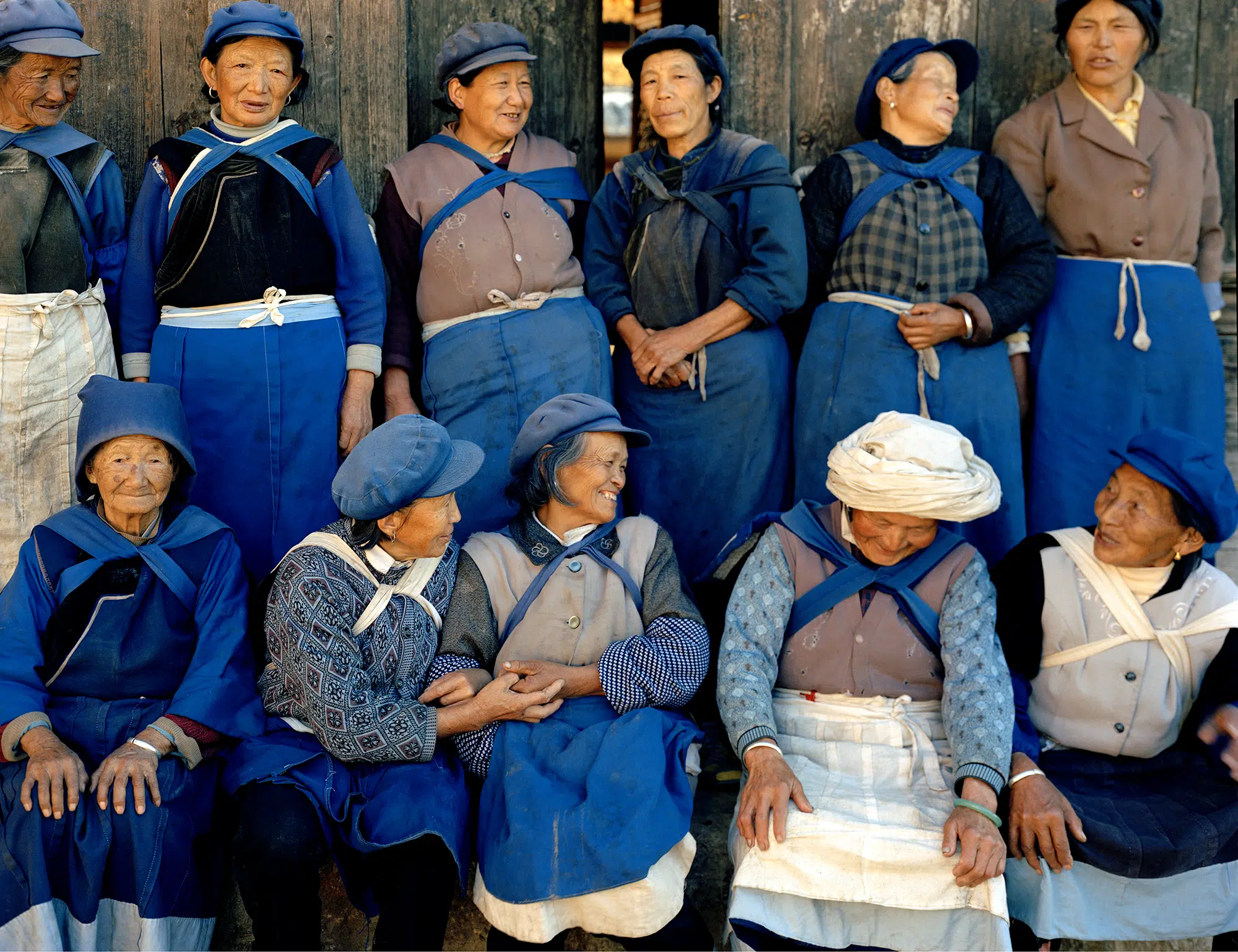
The Naxi minority, based in the ancient town of Lijiang in the Yunnan province, number some 278,000. They are easily recognizable with their blue blouses and trousers covered by blue or black aprons. Until recently, the Naxi lived in matriarchal families, though local rulers were always male. The Naxi society still maintains the matriarchs’ hold over men with flexible arrangements for joint residence. Both partners would continue to live in their respective homes; the boyfriend would spend the nights at his girlfriend’s house but return to live and work at his mother’s house during the day. Any children born to the couple belonged to the woman, who was responsible for bringing them up. The father provided support, but once the relationship was over, so was the support. Children lived with their mothers; no special effort was made to recognize paternity. Women inherited all property, and female elders adjudicated any disputes. There are strong matriarchal influences in the Naxi language. Nouns enlarge their meaning when the word for ‘ female’ is added; conversely, the addition of the word for’ male’ will decrease the meaning. For example, ‘stone’ plus ‘ female’ conveys the idea of a boulder; ‘stone’ plus ‘male’ conveys the idea of a pebble. Viewing these laughing women, one can see the closeness in friendship, which have endured since childhood.
The Naxi minority, based in the ancient town of Lijiang in the Yunnan province, number some 278,000. They are easily recognizable with their blue blouses and trousers covered by blue or black aprons. Until recently, the Naxi lived in matriarchal families, though local rulers were always male. The Naxi society still maintains the matriarchs’ hold over men with flexible arrangements for joint residence. Both partners would continue to live in their respective homes; the boyfriend would spend the nights at his girlfriend’s house but return to live and work at his mother’s house during the day. Any children born to the couple belonged to the woman, who was responsible for bringing them up. The father provided support, but once the relationship was over, so was the support. Children lived with their mothers; no special effort was made to recognize paternity. Women inherited all property, and female elders adjudicated any disputes. There are strong matriarchal influences in the Naxi language. Nouns enlarge their meaning when the word for ‘ female’ is added; conversely, the addition of the word for’ male’ will decrease the meaning. For example, ‘stone’ plus ‘ female’ conveys the idea of a boulder; ‘stone’ plus ‘male’ conveys the idea of a pebble. Viewing these laughing women, one can see the closeness in friendship, which have endured since childhood.