JOURNAL
Against Traffic: Honoring the Strength and Spirit of India’s Rickshaw Pullers
•
Lisa Kristine
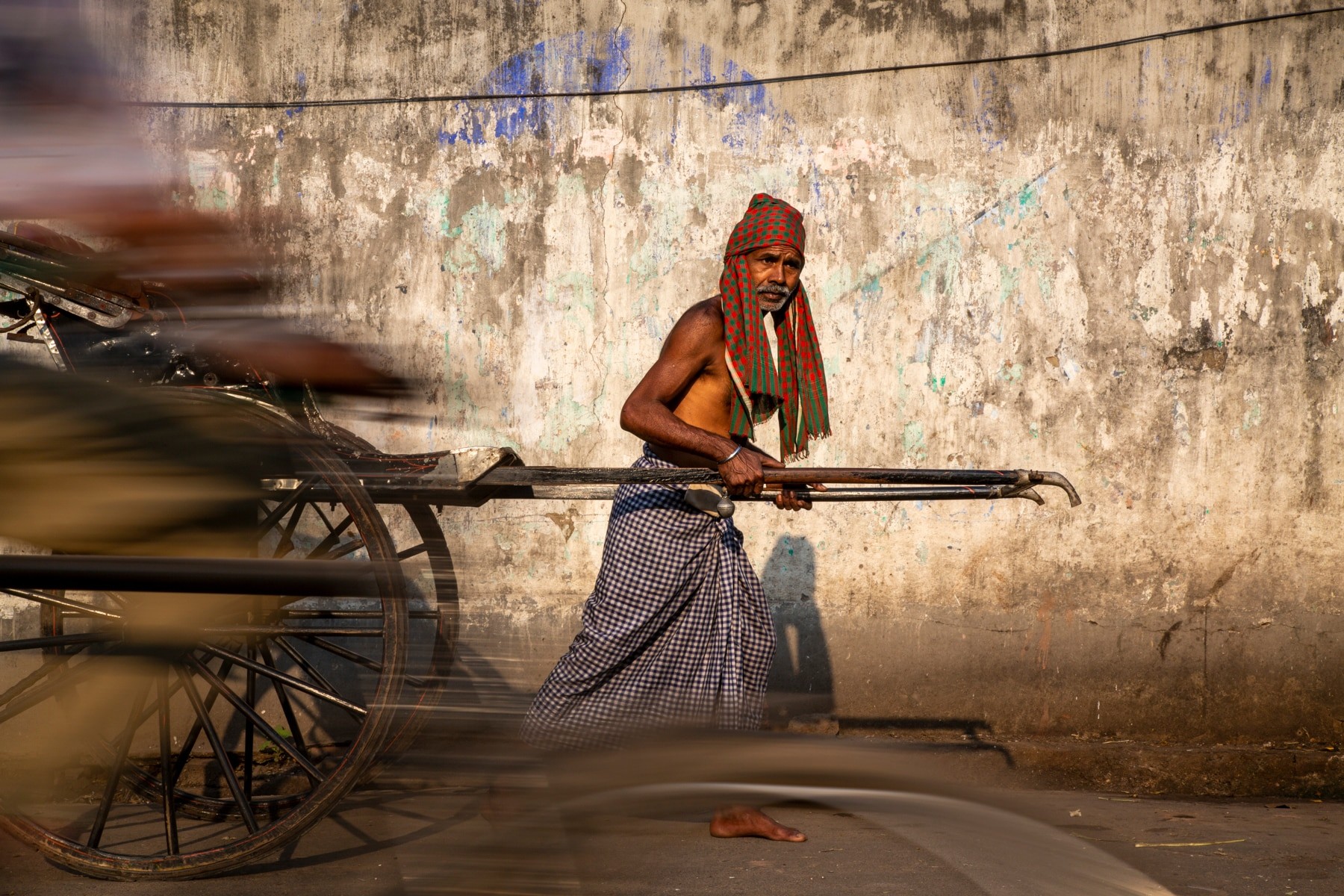
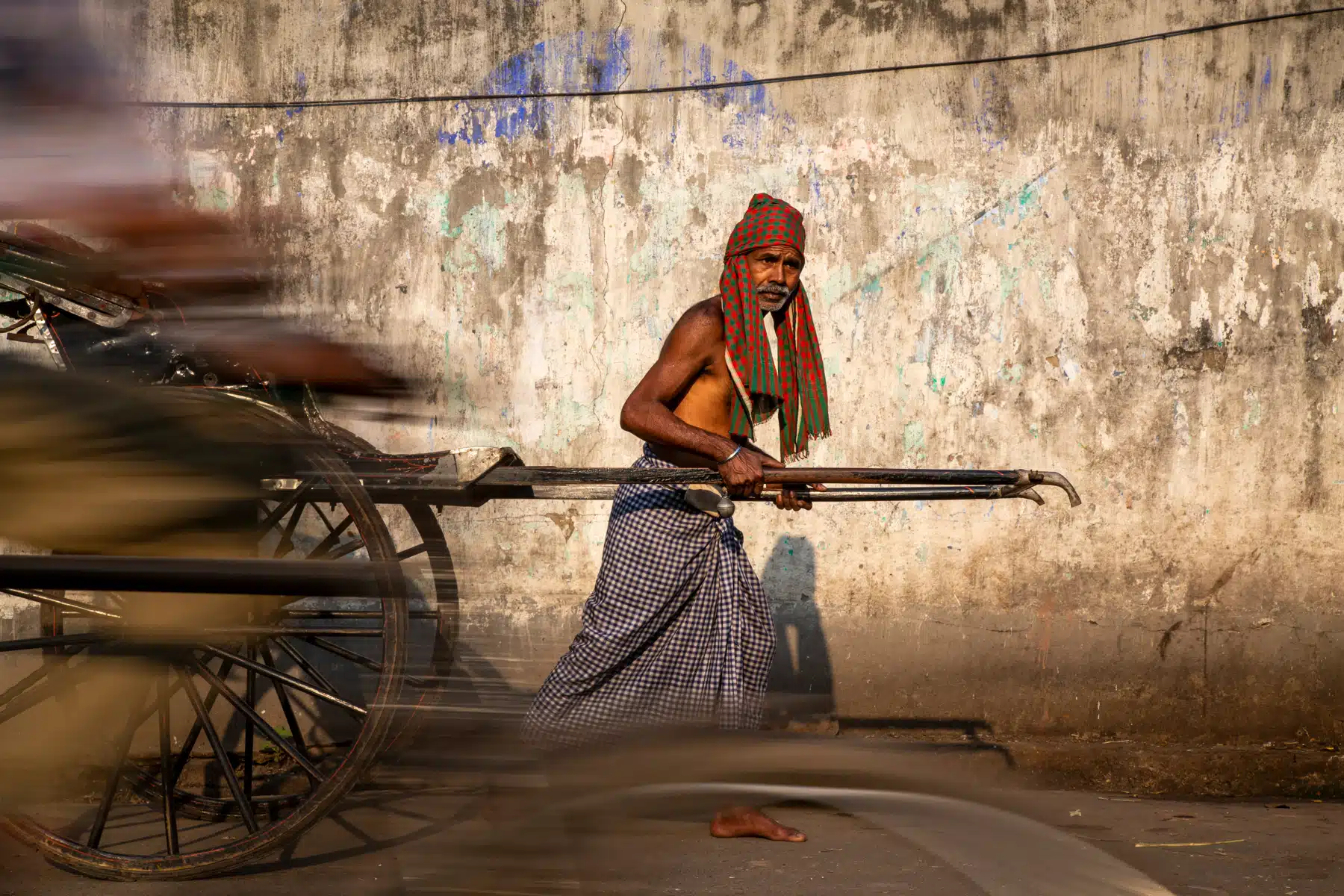
In a bustling Kolkata street, I watched a man push forward with purpose—barefoot, focused, and undeterred. His figure, a blur of motion and intent, surged toward me as a motorized vehicle blurred past in the opposite direction. The contrast struck me: ancient human labor moving against the tide of modernity.
This is where the story begins.
The Quiet Disappearance of an Ancient Trade
India’s cycle rickshaws have long been a part of the daily rhythm of life—pulling people, goods, and the pulse of a city forward. But modern transportation continues to edge out this centuries-old profession. In Kolkata, once filled with barefoot rickshaw pullers navigating narrow streets, the sight is becoming rarer. Machines now dominate the lanes once ruled by human effort.
Still, some persist. They were born into a caste, into a culture that holds a deeply rooted reverence for work—any work—done with dedication. Their profession is not merely about transportation; it is an act of service deeply intertwined with the fabric of community life.
A Moment in Kolkata: One Man, One Journey
I had been searching for a rickshaw worker to photograph—not just as a subject, but as a symbol. And I found him: lithe, focused, propelling himself forward with strength and urgency. His bare foot pressed against stone caught my attention—an image of endurance.
It’s easy to fixate on the discomfort, the hardship, even the controversy surrounding this kind of labor. It has been called barbaric, and perhaps rightfully so, when viewed solely through the lens of physical strain and social inequity. Yet as I stood before him, lens raised, I saw something else.
I saw dignity.
This was not a portrait of suffering, but of purpose. He was present—fully alive in his task. That presence, that power, is what I hope to reveal in my photography.
Dignity in Every Step
In cultures where physical labor is revered, there is a deep understanding that work, when performed with commitment, is sacred. Whether hauling market produce, transporting school children, or ferrying neighbors across town, the rickshaw puller’s task sustains the very flow of life around him.
There is an invisible thread connecting his footfalls to the beating heart of his community. His labor may be physically demanding and economically undervalued, but it is not without honor. And that honor is what I strive to hold space for in my humanitarian photography.
Beyond the Frame: The Larger Human Story
This man’s story mirrors a broader global shift—the fading of traditional labor in the face of mechanization. As we race forward into modernity, how do we acknowledge the ones left running behind, often barefoot, on gravel roads we now speed over in cars?
Human dignity is not found solely in comfort or efficiency. It lives in commitment, in resilience, in the choice to keep moving forward, even when the world rushes past in the opposite direction.
This is the essence of social impact storytelling: to hold a mirror to the lives that sustain our world quietly, steadily, and without fanfare.
Honoring the Human Spirit Amid Change
As I reflect on the moment—the press of his heel against stone, the strength etched in his stride—I realize this: maybe the world will soon no longer need his body’s labor. Maybe it’s time to offer rest.
But rest does not erase worth.
Even if the rickshaw itself disappears from the cityscape, the devotion it carried must be remembered. The portrait I captured that day is not about a vanishing trade; it’s about the spirit of purpose, ever resilient, ever moving forward.
How You Can Support:
Learn More: Explore the stories behind humanitarian labor and traditions at Human Thread Foundation.
Support Ethical Storytelling: Follow and share work from artists and organizations that highlight dignity in labor and social justice advocacy.
Reflect and Share: Think about the unnoticed workers in your own community. Share this post to honor those whose efforts often go unseen.